
The modern landscape is a testament to the intersection of human ingenuity and physical science. Every time you drive across a bridge, turn on a water faucet, or enter a commercial building, you are interacting with the work of specialized professionals. For those planning a development project, understanding the scope of civil engineering Oklahoma is the first step toward a successful build. This discipline is responsible for the design, construction, and maintenance of the physical and naturally built environment, ensuring that infrastructure is both functional and resilient enough to withstand local environmental challenges.
Defining the Core of the Discipline
At its most basic level, this field is about problem-solving on a massive scale. It involves taking raw land and transforming it into a structured environment that can support human activity. While many people associate the profession exclusively with vertical construction, the majority of the work happens at the ground level or below it.
The Breadth of the Field
The discipline is broad, covering everything from transportation systems and water treatment plants to structural integrity and geotechnical stability. In the context of regional development, civil engineering Oklahoma firms must account for specific soil conditions, weather patterns, and drainage requirements unique to the plains. By integrating mathematical precision with an understanding of material science, these professionals ensure that the foundation of our society remains stable.
The Vital Connection Between Engineering and Surveying
No engineering project can begin without a precise understanding of the land’s current state. This is where the partnership between the engineer and the land specialist becomes critical. Before a single pipe is laid or a foundation is poured, the site must be meticulously measured and mapped to prevent overlapping boundaries or structural failures.
Establishing the Ground Truth
If you are beginning a new commercial or residential project, your first step is often searching for a reliable surveying company near me. This professional provides the “ground truth”, the exact coordinates, elevations, and legal boundaries of the property. Without this data, the engineer is essentially working in the dark, which can lead to catastrophic errors during the construction phase.
The Role of the Local Professional
The expertise of a qualified Oklahoma surveyor is necessary to navigate the complexities of local property law and historical land records. These professionals use a combination of traditional techniques and satellite-based technology to produce the maps that engineers use as their primary canvas. By establishing the precise locations of existing utilities and topography, they allow the design team to plan for efficient grading and drainage.
Key Sub-Disciplines Within Civil Engineering Oklahoma
To better understand how a project comes together, it is helpful to look at the specific areas of expertise that contribute to a completed site. Each sub-discipline addresses a specific challenge of the built environment.
1. Structural Engineering
This branch of civil engineering Oklahoma focuses on the “bones” of a project. Structural engineers ensure that buildings, bridges, and towers can support their own weight as well as external loads like wind, snow, and seismic activity. They select the appropriate materials, be it steel, concrete, or timber, to ensure long-term durability.
2. Geotechnical Engineering
Everything sits on the earth, and geotechnical engineers study how the soil and rock will behave under the weight of a new structure. In our region, soil expansive properties can be a significant concern. Engineers perform soil borings and laboratory testing to design foundations that won’t shift or crack over time.
3. Water Resources and Environmental Engineering
Managing the flow of water is one of the most complex aspects of any development. This involves designing systems for storm water management, wastewater treatment, and clean water distribution. Proper drainage design is essential to prevent flooding on the site or for neighboring properties.
4. Transportation Engineering
From private access roads to major highways, transportation engineers design the paths we take to get from point A to point B. They analyze traffic patterns, pavement durability, and safety requirements to create efficient transit systems.
The Lifecycle of a Construction Project
Understanding the “101” of this industry requires looking at the chronological steps involved in bringing a project from a concept to a finished product. Each phase requires a different set of skills and technical deliverables.
Site Investigation and Feasibility
During the earliest stages, the team, which may include parties alongside the civil engineer, such as an Oklahoma surveyor, evaluates whether the land can actually support the intended use. This involves checking zoning laws, environmental regulations, and physical constraints. A thorough feasibility study can save a developer millions of dollars by identifying “deal-breakers” before the land is even purchased.
Detailed Design and Permitting
Once the project is deemed feasible, the detailed design begins. This results in a set of construction documents, blueprints that tell the contractor exactly where everything goes. These plans must be submitted to local government agencies for approval, a process that ensures the project meets safety and environmental standards.
Construction Management and Inspection
During construction, the engineer often stays involved to ensure the work matches the plans. They perform inspections, test materials, and solve problems that arise when the reality of the dirt doesn’t perfectly match the initial digital model.
Frequently Asked Questions
Why do I need an engineer if I already have a contractor?
While a contractor handles the physical labor and assembly, civil engineering Oklahoma professionals provide the technical design and legal certifications required to ensure the structure is safe and compliant with the law. The engineer protects the owner’s interests by verifying that the work is done correctly.
When should I hire a surveying company near me?
You should engage an Oklahoma surveyor during the due diligence period before you buy property. Identifying easements, encroachments, or boundary discrepancies early can prevent legal battles later. You will also need them during construction to stake out the locations of the new structures.
What is the difference between a plat and a survey?
A survey is a physical measurement of a single piece of land, while a plat is a map of a larger area (like a subdivision) that has been divided into smaller lots. Both are legal documents, but they serve different purposes in the land development process.
The Importance of Local Expertise
National standards exist, but local conditions dictate the success of a project. An Oklahoma surveyor understands the specific meridian and baseline systems used in the state, as well as the unique historical records that might affect a title. Similarly, an engineer familiar with the local climate will design better drainage systems than someone working from a thousand miles away.
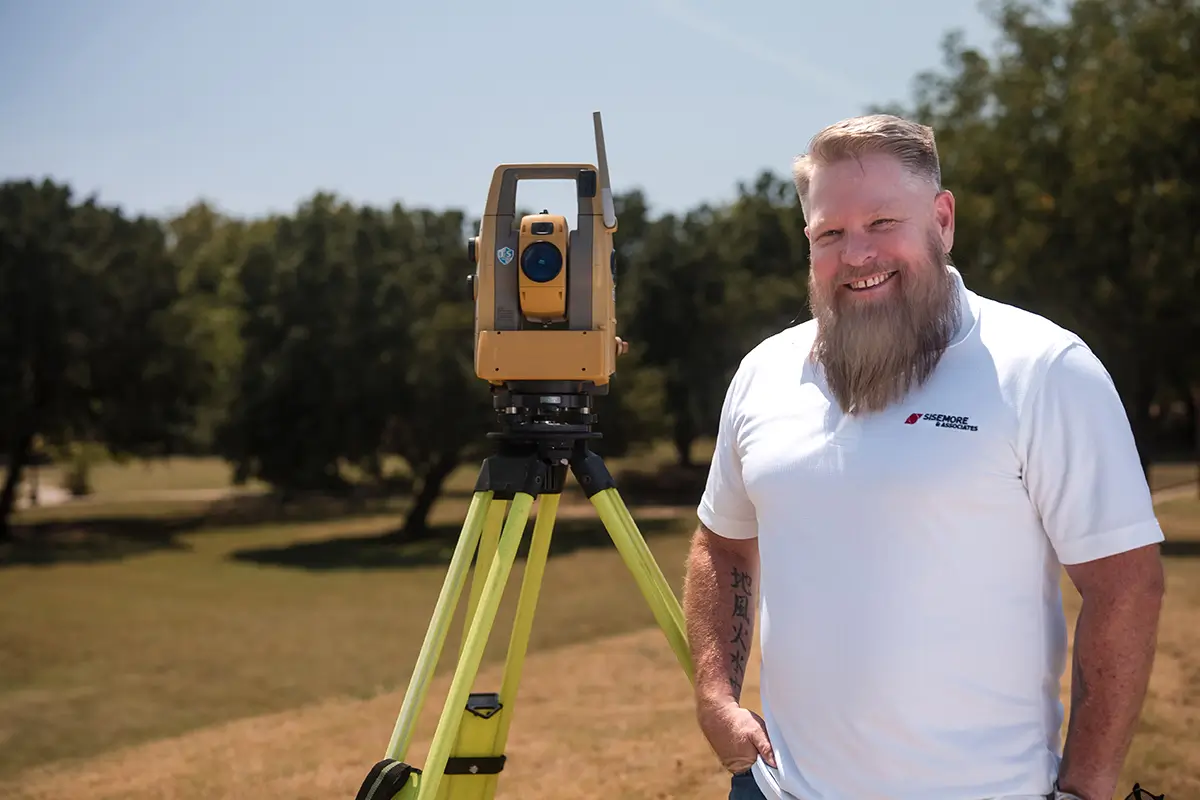
Selecting the Surveying Company Near Me
Choosing a firm is about more than just finding the lowest bid; it is about finding a partner who understands the high stakes of land investment. The right team will provide a seamless transition between the initial measurements and the final engineering seals.
When searching for a surveying company near me, look for a firm that offers an integrated approach. By having the design team and the field crews working under the same roof, communication is streamlined, and the margin for error is significantly reduced. This synergy is what allows complex projects to stay on schedule and under budget.
For Your Foundation for Success
At Sisemore & Associates, we take pride in being a premier provider of civil engineering services. Our firm was built on the principle that precision in the field leads to excellence in design. We offer a full suite of services designed to take your project from a raw plot of land to a fully realized development.
Our capabilities include:
- Land Planning and Development: Helping you visualize and maximize the potential of your site.
- Infrastructure Design: Creating robust systems for roads, utilities, and drainage.
- Commercial and Residential Surveys: Providing the accurate data required for title insurance and construction.
Whether you are a developer looking for an experienced Oklahoma surveyor or a municipality in need of complex infrastructure design, our team has the local knowledge and technical expertise to deliver results. We combine decades of experience with the latest in GPS and aerial mapping technology to ensure your project is founded on unquestionable accuracy.
Are you ready to move your project forward with a team that values precision and partnership? Schedule a consultation and see how our integrated engineering and surveying services can bring your vision to life.