
In the world of land development and civil engineering, precision is the foundation of every successful project. Before a single foundation is poured or a property line is finalized, a specialized document known as a survey plat must be generated. This technical illustration serves as a legal and visual representation of a piece of land, detailing its boundaries, divisions, and any pertinent easements. Much of what land surveyors do involves the creation of these critical records to ensure that developers, municipal planners, and private landowners have the clarity necessary for protecting investments and ensuring regulatory compliance.
A survey plat is much more than a simple map; it is a professional-grade document recorded with government agencies to define the legal geometry of a property. It acts as the definitive source of truth for property dimensions, providing the data needed to navigate land ownership and construction safely. To produce an accurate plat, one must rely on the specialized expertise and technical rigor of licensed professionals who understand the legal and physical complexities of the terrain.
Key Elements Found on a Survey Plat
A standard survey plat contains several critical layers of information that describe the property’s legal and physical status. While the specific requirements can vary depending on the project type, most professional plats include the following:
Boundary Lines and Metes and Bounds
The primary purpose of the plat is to define the perimeter of the land. This is expressed through “metes and bounds,” which are the precise distances and angles (bearings) that describe the path of the property line. These dimensions are the bedrock of property ownership and are used to resolve any future disputes.
Easements and Right-of-Ways
Plats must identify any portions of the land where third parties have a legal right to access or use the property. This includes utility easements for water, sewer, and power lines, as well as right-of-ways for public roads or shared access. Understanding these restrictions is vital for site planning to avoid building over critical infrastructure.
Legal Description and Certification
Every plat features a formal legal description that situates the property within a larger context, such as a specific township, range, and section. Furthermore, the document is finalized with the seal and signature of a licensed professional. This certification validates that the survey plat meets all state and local technical standards.
Common Scenarios Requiring a Plat
There are various stages of land ownership and development where a formal survey plat becomes a mandatory requirement.
- Subdividing a Parcel: When a large tract of land is being divided into smaller lots for a residential subdivision or commercial park, a subdivision plat must be drafted and approved by the local planning commission.
- Property Transactions: Most commercial lenders and title insurance companies require a fresh survey plat to ensure the asset being financed is correctly described and free of boundary issues.
- Building and Permitting: Municipalities often require a plat to verify that proposed structures comply with setback requirements—the minimum distance a building must be from the property line.
- Dispute Resolution: In instances where a fence, driveway, or building is suspected of crossing a property line, a plat provides the evidence needed for legal resolution.
For those managing projects in active development zones, securing reliable land surveying near me is the first step in avoiding the costly delays associated with incorrect boundary assumptions.
Types of Survey Plats
Depending on the specific needs of the client or the requirements of the municipality, a surveyor may produce different variations of a plat:
- Boundary Plat: A straightforward map focused on the exterior limits of a single property.
- Subdivision Plat: A complex map showing how a large area is split into multiple lots, complete with new street names and utility layouts.
- Amended Plat: A document filed to correct minor errors on a previously recorded plat without changing the overall scope of the land.
- Vacating Plat: Used when a landowner intends to merge several smaller lots back into one large tract, effectively “vacating” the previous divisions.
Why You Need a Professional Land Survey Firm
Navigating the complexities of Oklahoma’s land laws and municipal zoning requirements requires more than just high-tech equipment; it requires localized expertise. Partnering with a reputable land survey firm ensures that your plat is not only accurate but also compliant with the specific standards required for recording at the county or city level. Professional firms bridge the gap between raw field data and the refined technical drawings required by architects, engineers, and title companies.
A professional firm provides the oversight necessary to identify potential hurdles early in the development lifecycle. Whether it is discovering a previously unrecorded utility easement or identifying a boundary encroachment that could lead to litigation, these experts protect the project’s timeline. By providing a certified and stamped plat, they offer the legal insurance required for title transfers and construction permits.
The Foundation of Accuracy: What Land Surveyors Do
To create a document with such high legal and technical stakes, the process begins with a comprehensive data collection phase. A common misconception is that surveyors are limited to placing stakes in the dirt, but the reality of what land surveyors do involves a sophisticated blend of forensic historical research and advanced geospatial technology. They must first analyze property deeds, historical maps, and municipal records to determine the original intent of land boundaries.
Once the research is complete, the field work begins. Surveyors use high-precision instruments such as robotic total stations, GPS, and often 3D laser scanners to gather millions of data points across the terrain. This information is then reconciled with legal descriptions to ensure that the resulting survey plat reflects the actual physical conditions of the site. This meticulous process ensures that the property lines are defensible and that all stakeholders have a clear understanding of the land’s constraints.
The Importance of High-Tech Precision
In the modern era, the accuracy of a survey plat has been vastly improved by the integration of aerial and ground-based technology. Firms that utilize UAV (drone) mapping and 3D laser scanning can capture site data with a level of detail that traditional methods simply cannot match. This technology allows for the creation of 3D point clouds and high-resolution orthomosaics, which are then used to inform the 2D survey plat.
This level of precision is particularly important for civil engineering projects where every inch of elevation and horizontal space counts. By utilizing these advanced tools, professionals can ensure that the plat is a perfect reflection of the physical world, reducing the margin for error during the construction phase.
Frequently Asked Questions
Understanding the technicalities of land surveying can be challenging. The following section addresses common inquiries regarding survey plats and their role in land management.
Is a survey plat the same as a plot plan?
No. While they may look similar, a survey plat is a legal document based on a professional boundary survey and is usually recorded with the county. A “plot plan” is a design tool used for construction to show where buildings will be placed on a lot, and it does not carry the same legal weight as a certified plat.
How do I know if my property has already been platted?
Most platted land is part of a formal subdivision. You can check with your local County Clerk’s office or a title company to see if a plat has been recorded for your legal description. If your land is described by “metes and bounds” rather than a lot and block number, it may not be part of a formal plat.
Can a plat be changed once it is recorded?
Yes, but it requires a formal legal process. Depending on the change, an “Amended Plat” or a “Replat” may be necessary. This often involves a new survey and approval from the local planning or zoning board.
Does a survey plat show the location of my house?
A standard subdivision plat usually shows the land boundaries and easements, not the structures. However, if you require a specific survey, such as an ALTA survey or a boundary survey with improvements, the buildings will be accurately mapped on the document.
Partner With Sisemore & Associates for Your Surveying Needs
When your project demands absolute accuracy and professional integrity, selecting the right partner is the most important decision you can make. A survey plat is more than just a drawing; it is the legal foundation of your property rights and your project’s success.
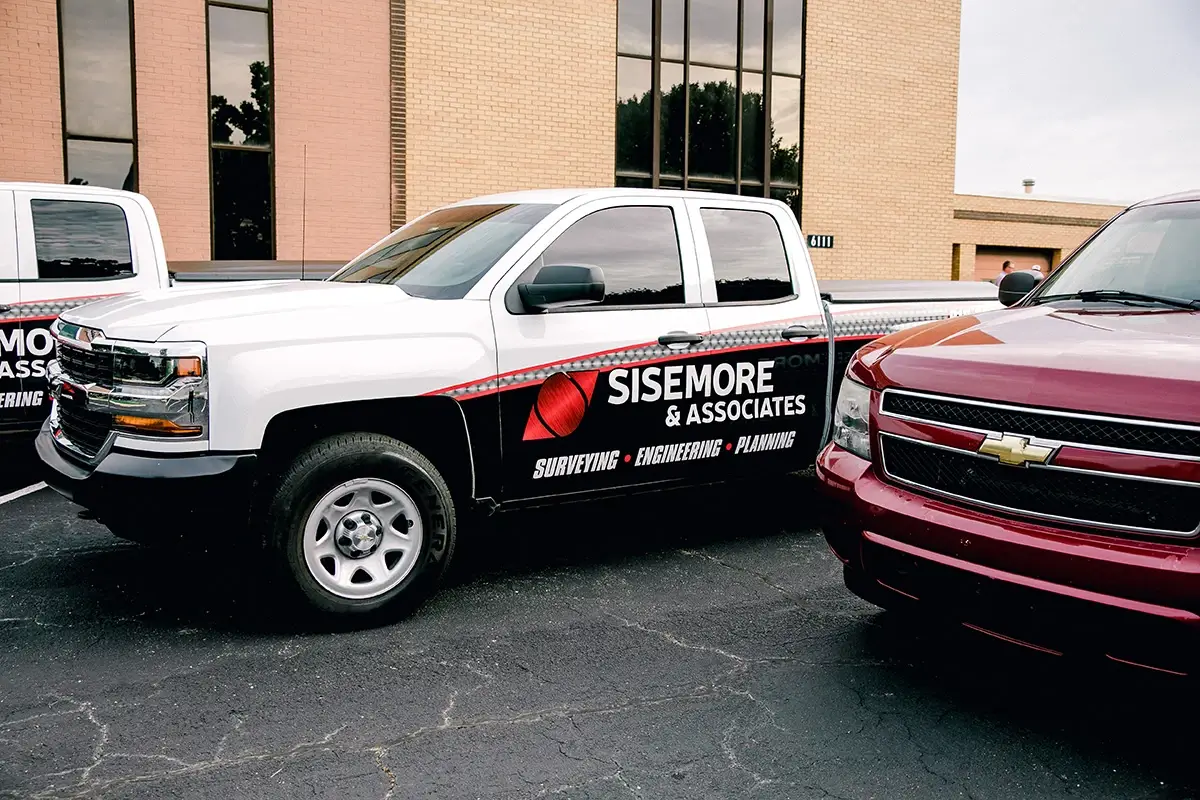
As a premier land survey firm with over 30 years of experience serving Tulsa, Oklahoma City, and the surrounding regions, Sisemore & Associates provides an integrated approach to surveying and civil engineering. We combine the technical skill of our field crews with the high-level design capabilities of our civil engineering team to deliver results that are both precise and actionable.
Our team is dedicated to the core principles of what land surveyors do: protecting our clients by providing data-driven solutions for complex land needs. We offer a full range of services to support your project, including:
- Comprehensive Land Surveying (ALTA, Boundary, and Topographic)
- Expert Land Planning and Zoning Consultation
- Precision Civil Engineering
- Advanced UAV Mapping and 3D Laser Scanning
If you are seeking professional land surveying near me, look to the experts who prioritize technology, efficiency, and local expertise.
Contact Sisemore & Associates today to discuss your survey plat requirements and ensure your next project starts on solid ground.