
The use of drones in construction has changed how project teams collect data, monitor progress, and manage job sites. What once required large crews, extended timelines, and manual measurements can now be completed faster and with greater accuracy using unmanned aerial technology. From early planning to final inspections, drones help improve visibility across every stage of a project.
Construction sites are constantly evolving environments. Accurate information is critical for scheduling, budgeting, safety, and coordination between contractors and engineers. Drone technology provides a practical way to capture reliable site data without interrupting ongoing operations.
Why Drone Technology Matters on Construction Sites
Modern construction projects depend on accurate site information. Small measurement errors or outdated site data can lead to delays, redesigns, and increased costs. Drones allow teams to collect current aerial imagery and mapping data quickly, helping decision-makers respond to changing site conditions in real time.
Some of the most common benefits include:
- Faster site documentation
- Improved job site visibility
- Safer inspections in difficult areas
- More accurate earthwork calculations
- Better communication between stakeholders
- Reduced need for repeated manual measurements
Because drones can capture large areas efficiently, they are especially valuable on commercial developments, infrastructure projects, subdivisions, and large-scale grading operations.
Core Applications of Aerial Technology in Project Lifecycles
Deploying unmanned aerial vehicles (UAVs) on a job site provides an efficient, non-invasive method for gathering field data. By integrating aerial technology into daily operations, contractors, surveyors, and engineers gain an absolute overview of a property’s physical changes. This technological integration serves several distinct operational functions, from breaking ground to final closeout.
Site Mapping and Pre-Construction Planning
One of the earliest applications of drone technology is during site evaluation and planning. Before construction begins, aerial data helps engineers and surveyors understand existing site conditions. Drone-generated imagery can identify elevation changes, drainage patterns, vegetation, existing structures, and utility corridors.
This information supports planning decisions and improves coordination before crews mobilize on site. The use of drones in surveying also helps reduce costly surprises during excavation and grading phases while maintaining a high level of precision, supplementing traditional ground-based methods on difficult terrain.
Progress Monitoring Throughout Construction
Construction projects involve multiple moving parts. Contractors, developers, and project managers need regular updates to track schedules and verify completed work. Drones provide current aerial images and progress documentation that can be reviewed throughout the project lifecycle.
Regular flight captures create visual records that help teams compare ongoing work against design plans and construction timelines. This progress monitoring assists with tracking earthwork alignments, monitoring material staging locations, and verifying major construction milestones for stakeholder reporting.
Safer Inspections and Data Collection
Construction sites often contain hazardous or difficult-to-access areas. Roof systems, elevated structures, steep slopes, and active excavation zones may create safety concerns for manual inspections. Drones reduce the need for personnel to enter dangerous locations unnecessarily, allowing teams to inspect structures remotely.
High-resolution cameras capture detailed visual data for roof inspections, bridge reviews, and stormwater system observations. By reducing exposure to hazardous conditions, drone technology supports safer project workflows while improving inspection efficiency across the entire layout.
Volumetric Measurements and Earthwork Analysis
Earthmoving operations require accurate calculations to manage budgets and material quantities. Traditional measurement methods can be time-consuming, especially on large sites. Drone data helps calculate cut and fill quantities, stockpile volumes, excavation progress, and site balance estimates.
These measurements allow contractors and developers to make informed decisions regarding hauling, grading, and scheduling. The use of drones in surveying has become especially valuable for volumetric analysis because aerial models can capture large areas with detailed surface information in relatively short timeframes.
Construction Documentation and Record Keeping
Detailed documentation is essential for construction management. Drone imagery creates consistent visual records that assist with reporting, inspections, insurance documentation, and final project closeout.
Aerial records help teams document pre-construction baselines, maintain historical site records, and support dispute resolution by verifying completed work. Because flights can be repeated regularly from identical coordinates, drone documentation creates a highly accurate, time-lapse record of site activity over the duration of a build.
Understanding How Surveying Works With Drone Technology
Many property owners and developers ask how long surveying works when drone technology is involved. The answer depends on the size of the property, terrain conditions, project complexity, weather, and the level of detail required. Drone-assisted surveying can often reduce field collection time compared to traditional methods alone, especially for large sites. However, aerial data still requires professional processing, verification, and quality control before final deliverables are produced.
Several factors influence timelines:
- Site size and accessibility
- Vegetation coverage
- Flight conditions and weather
- Required accuracy standards
- Data processing and reporting needs
While drones improve efficiency, experienced survey professionals remain essential for interpreting data, validating measurements, and ensuring compliance with project requirements.
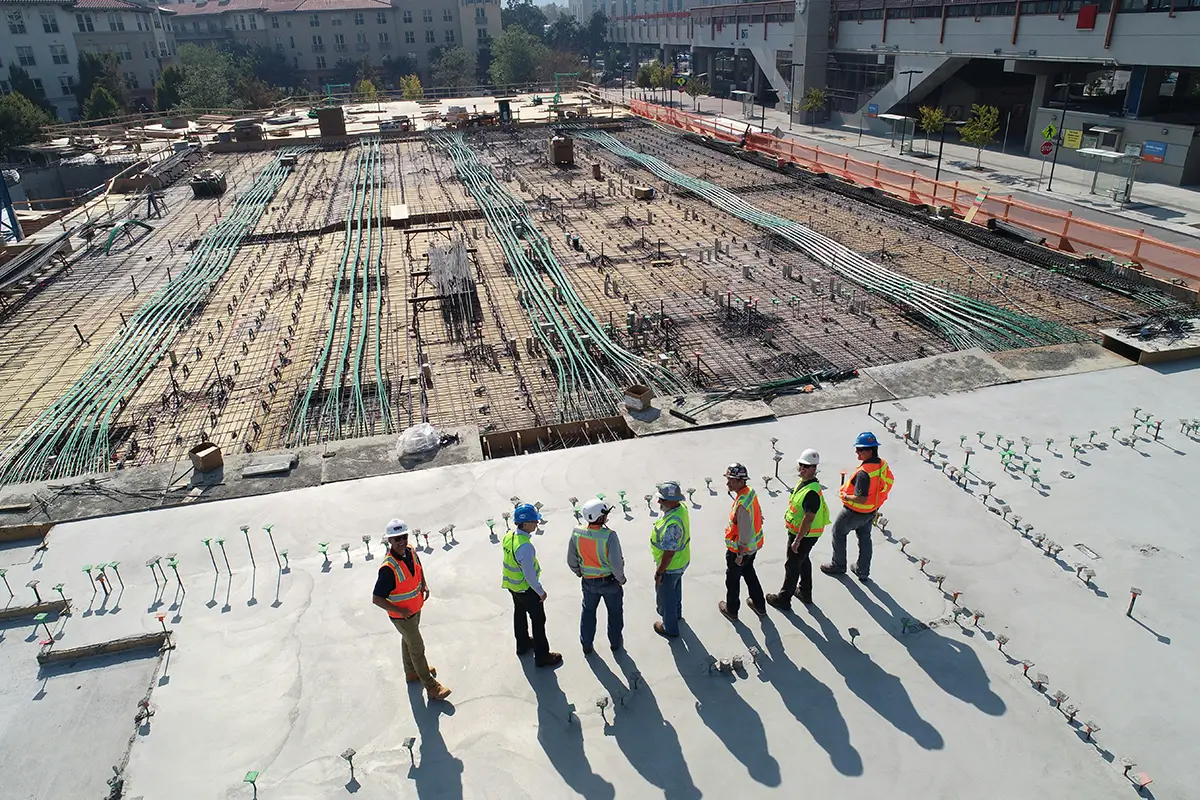
How Drone Data Supports Civil Engineering
Drone technology is increasingly integrated into civil engineering workflows. Civil engineers use aerial mapping data to assist with planning, drainage analysis, grading design, utility coordination, and construction verification.
Accurate aerial information supports better decision-making during:
- Residential developments
- Commercial construction
- Roadway projects
- Utility infrastructure work
- Stormwater management planning
The use of drones in construction continues to expand because it improves visibility across complex projects while helping teams work more efficiently.
Frequently Asked Questions Regarding Aerial Mapping
Integrating aerial technology into civil projects often brings up technical and regulatory questions. The following section provides clarity on how professional surveying and civil engineering firms deploy drones safely and effectively on the job site.
Are drones accurate enough for construction projects?
Professional drone mapping systems can provide highly accurate data when operated and processed by experienced surveying professionals. Accuracy requirements vary depending on project scope and intended use.
Can drones replace traditional land surveying?
Drones are valuable tools, but they do not fully replace traditional surveying methods. Ground control, professional oversight, and licensed survey expertise remain important for many projects.
How long does surveying work on a construction project?
Project timelines vary depending on property size, terrain, weather conditions, and required deliverables. Drone technology may reduce field collection time, but processing and verification are still critical parts of the workflow.
What types of projects benefit most from drones?
Large construction sites, infrastructure projects, subdivisions, commercial developments, grading operations, and sites with difficult terrain often benefit significantly from drone mapping and aerial data collection.
Partner With an Experienced Surveying and Engineering Team
At Sisemore & Associates, we combine advanced technology with experienced surveying and engineering expertise to support projects from planning through construction. Our team provides aerial mapping, land surveying, civil engineering, and site development services for residential and commercial infrastructure projects throughout Tulsa and Oklahoma as a whole.
Whether you need detailed topographic data, construction layout support, or aerial site documentation, we deliver reliable information that helps projects move forward efficiently and accurately.
Contact Sisemore & Associates today to learn how drone technology and professional surveying services can support your next construction project.